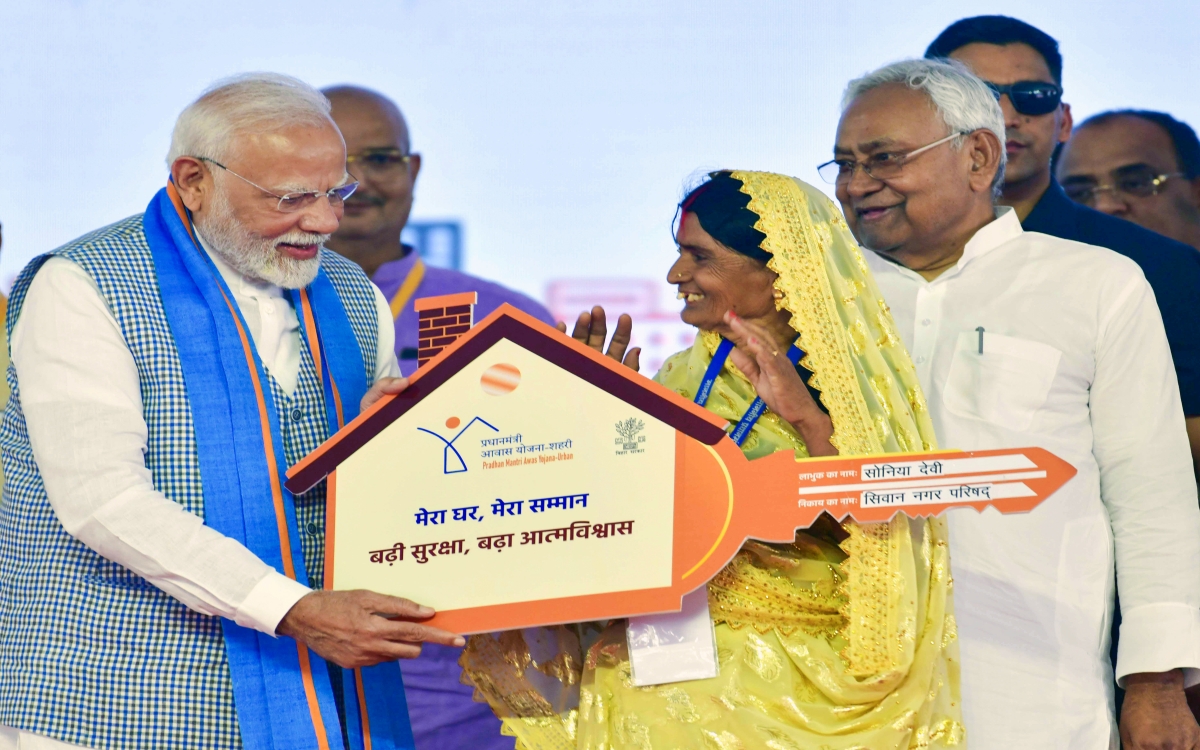
India’s flagship housing programme Pradhan Mantri Awas Yojana is increasingly being seen as a model for developing nations in the Global South, with its focus on social inclusion, gender equality and empowerment of economically weaker sections.
The scheme, which provides housing support in both urban and rural areas, is being recognized internationally for combining housing development with social justice and economic empowerment.
‘Housing for All’ Viewed Through Human Rights Lens
According to an article published by Asian News Post, India’s “Housing for All” initiative is now being viewed from a human rights perspective. The programme aims not only to provide homes to poor citizens but also to ensure dignity, social security and equal opportunities for vulnerable communities.
A key feature of the scheme is encouraging ownership of houses in the name of women, which has been widely regarded as a transformative policy step.
Strong Focus on Women’s Ownership
The report highlights that initiatives such as Pradhan Mantri Awas Yojana Gramin, Pradhan Mantri Awas Yojana Urban, PMAY-Urban 2.0, and the Credit Linked Subsidy Scheme demonstrate how India’s housing policy is designed to promote gender equality and economic empowerment.
Providing property ownership to women ensures that they are recognized not merely as dependents but as legitimate property owners with legal rights.
Homes in Rural Areas Symbolise Dignity and Security
In rural India, houses built under PMAY-Gramin are no longer just shelters but have become symbols of social dignity and community participation.
The scheme guidelines clearly state that women’s names must be included in property ownership. In many cases, women are either sole owners or joint owners of the house with male family members.
Nearly 75% Houses Registered in Women’s Names
Government data shows that nearly three out of four houses built under the scheme are registered in the name of women. The government aims to achieve 100% female ownership in the future.
Ownership of property significantly strengthens women’s decision-making power within families while improving their economic and social security.
Houses Linked with Other Welfare Schemes
Homes built under the rural housing programme are also being connected with other government schemes such as sanitation, drinking water supply, electricity, LPG and solar energy.
This integrated approach ensures that beneficiaries receive not just a house but a safer and healthier living environment, improving women’s privacy, safety and health conditions.
Affordable Housing Focus in Urban Areas
In cities, PMAY-Urban and PMAY-Urban 2.0 aim to provide affordable housing to slum dwellers, low-income workers and middle-income families.
Under the scheme, it is mandatory that a woman member of the family be the owner or co-owner of the house in the Economically Weaker Section (EWS) and Low Income Group (LIG) categories.
Credit Linked Subsidy Provides Financial Support
The Credit Linked Subsidy Scheme (CLSS) plays a crucial financial role by offering interest subsidies on home loans for eligible beneficiaries to purchase, construct or expand houses.
A key condition under this scheme for EWS and LIG categories is mandatory inclusion of a woman in property ownership, directly linking financial support with women’s property rights.
Global Recognition for Inclusive Housing Policy
Experts believe that India’s housing initiatives under PMAY demonstrate how large-scale welfare programmes can combine infrastructure development with social empowerment, making the scheme a potential model for other developing countries seeking inclusive and sustainable housing solutions.